
Lancaster County Market Update – February 2026
Low Inventory Continues to Shape the Market
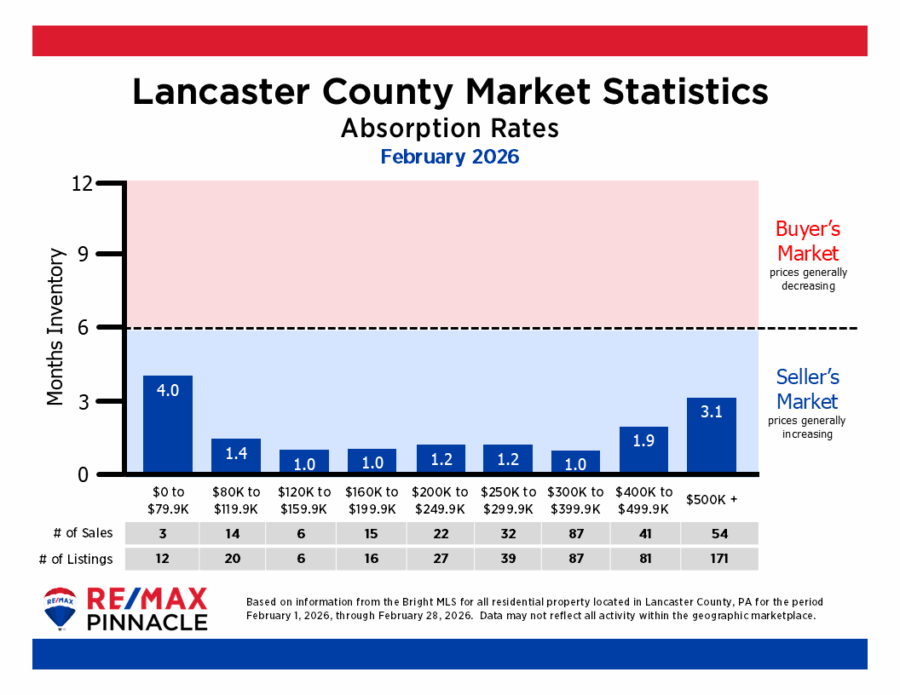
As we move closer to spring, Lancaster County remains a low-inventory market. While some metrics show slight shifts year over year, demand continues to outpace supply — keeping sellers in a strong position.
Market Snapshot
-
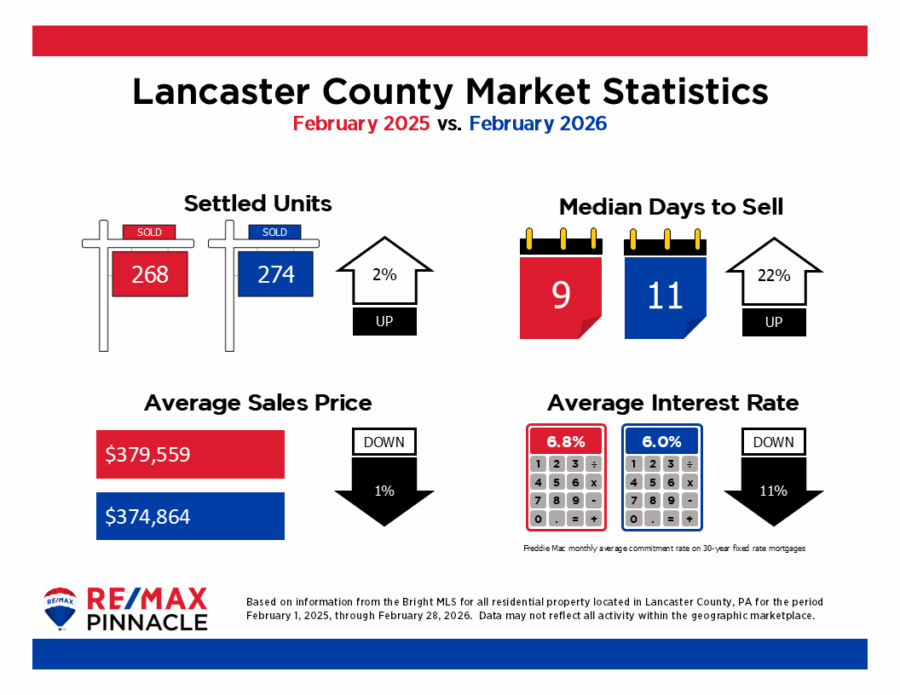
Settled Units: 274 homes sold (up 2% from 268 last year)
-
Median Days to Sell: 11 days (up 22% from 9 days last year)
-
Average Sales Price: $374,864 (down 1% from $379,559)
-
Average Interest Rate: 6.0% (down from 6.8%)
What This Means for Home Sellers
-
Inventory Is Still Tight.
Even though homes are taking slightly longer to sell (11 days vs. 9), that’s still an extremely fast market by historical standards. Demand remains strong relative to available homes. -
Serious Buyers Are Active.
A 2% increase in closed sales shows that buyers are moving forward — especially with improved interest rates. -
Pricing Still Matters — But Sellers Have Leverage.
While average price dipped slightly (1%), limited inventory continues to protect home values. Well-prepared, properly-priced homes are still commanding strong attention.
What This Means for Home Buyers
-
Competition Isn’t Gone.
Even with homes taking a couple days longer to sell, properly-priced, desirable properties move quickly. Buyers still need to be prepared and decisive. -
Lower Rates Increase Competition.
With interest rates dropping to 6.0%, more buyers may re-enter the market this spring — adding pressure to an already tight inventory environment. -
Waiting Could Mean More Competition.
As we approach peak season, the number of buyers will increase. Buyers who act before the spring surge may gain an edge.
The Bottom Line
Lancaster County remains a seller-leaning market driven by low inventory.
-
Sellers continue to benefit from limited competition and motivated buyers.
-
Buyers should be prepared, pre-approved, and ready to act when the right home hits the market.
With spring approaching, expect supply to increase but demand will as well, especially if rates don’t creep back up.